Blue Iris – Overview
Overview
Blue Iris is the core platform for managing cameras, recording strategy, motion detection, AI-assisted analysis, alerts, storage, and system tuning.
This page provides a high-level view of how the Blue Iris environment is structured and how the major components work together.
🎯 Objective
- Explain the purpose of the Blue Iris system
- Provide a high-level operational view
- Establish the main configuration areas
- Create a clean starting point for deeper documentation
🧠 Key Concepts
- Camera ingestion and stream handling
- Recording modes and retention
- Motion detection and trigger behavior
- AI confirmation workflows
- Alerts and notifications
- Profiles and schedules
- Storage and database health
- Performance and hardware acceleration
System Architecture
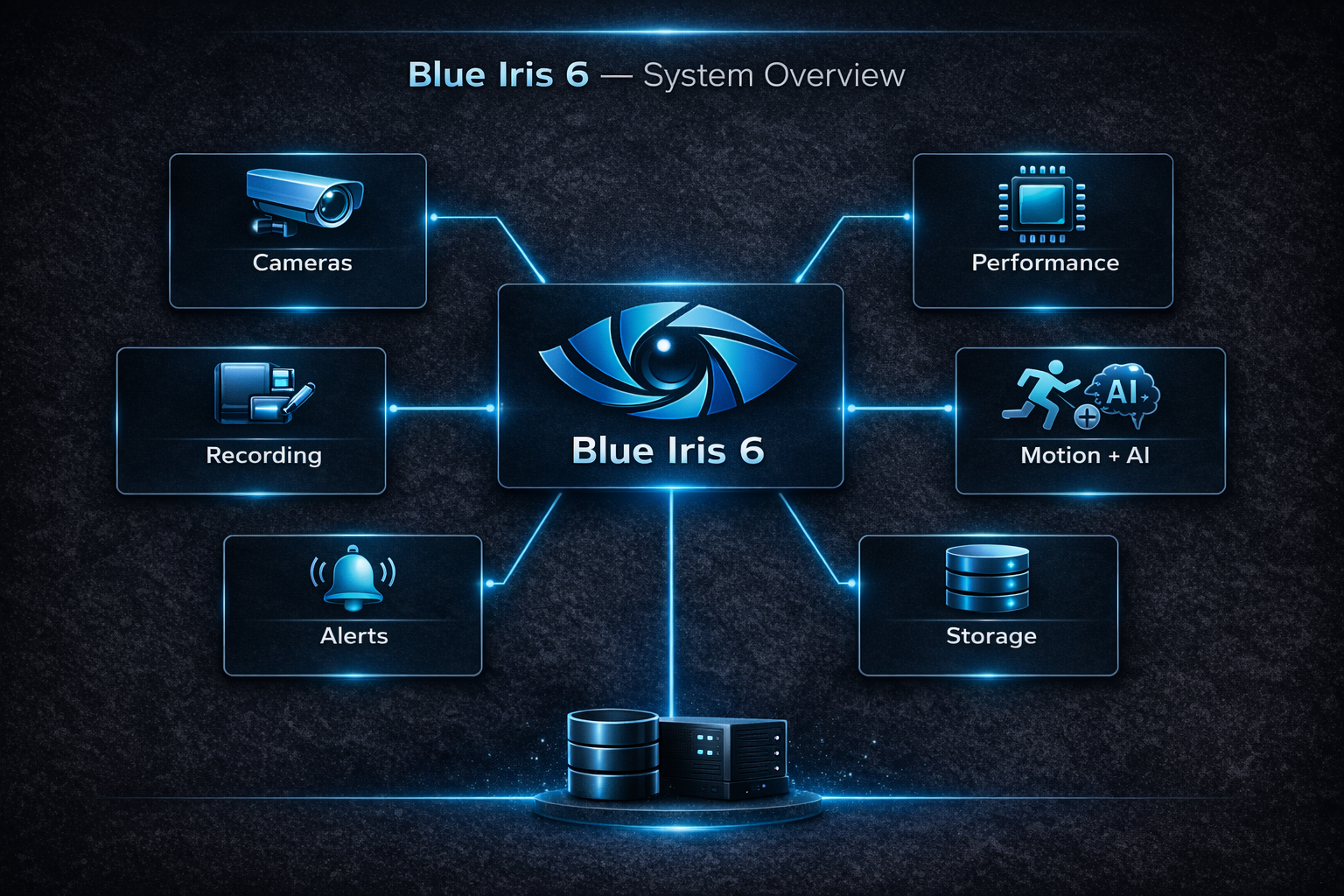
🛠️ System Areas
Cameras
Blue Iris connects to IP cameras, manages streams, and coordinates recording, live view, and alert workflows.
Recording
Recording behavior is driven by profiles, trigger logic, direct-to-disk strategy, retention rules, and storage architecture.
Motion + AI
Motion detection triggers events, while AI confirmation reduces false alerts and improves event quality.
Alerts
Alerts may include notifications, clips, still images, mobile push, and other actions depending on configuration.
Storage
Storage includes New, Stored, Alerts, database maintenance, and long-term retention strategy.
Performance
System performance depends on codec, frame rate, resolution, AI load, and hardware acceleration.
📊 Related Pages
⚠️ Notes
- This page should stay high-level and easy to scan
- Detailed procedures belong in dedicated pages
- Use this page as a front door to the rest of the Blue Iris section
🧠 Real-World Notes
- H.264 is often more stable than H.265 in multi-camera setups
- Direct-to-disk reduces CPU load significantly
- AI confirmation should be tuned before enabling alerts
- Pre-trigger settings are critical for capturing full events
- Too many high-resolution streams can degrade performance quickly
✅ Result
A clear, high-level understanding of how the Blue Iris system components fit together.