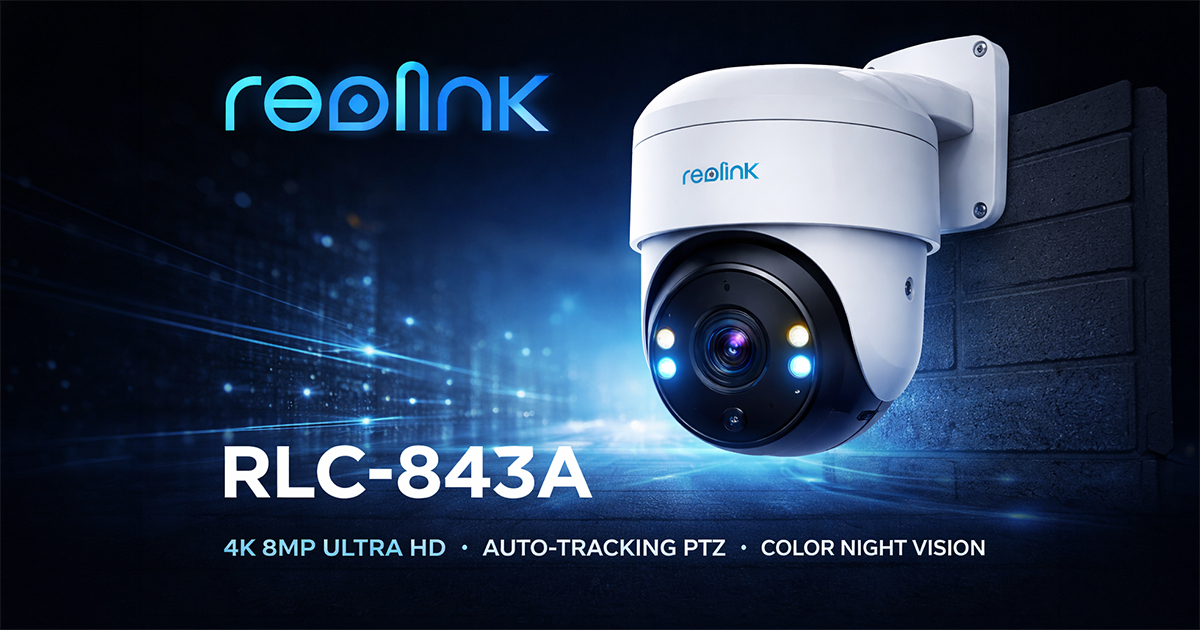
Reolink RLC-843A
🔹 Overview
The Reolink RLC-843A is a varifocal dome camera used where adjustable framing and controlled scene coverage are important.
This page documents its practical role and tuning priorities within a Blue Iris system.
🎯 Objective
- Provide a practical reference for the RLC-843A
- Support stable integration with Blue Iris
- Document tuning and framing priorities
- Capture tradeoffs between coverage, detail, and performance
🧠 Key Concepts
- Varifocal dome form factor
- Adjustable field of view
- Greater framing control than fixed-lens cameras
- Scene-specific tuning matters more than maximum settings
- Dome deployments often focus on controlled coverage zones
🛠️ Practical Setup Priorities
Framing
- Use the varifocal capability intentionally
- Narrow the scene when identification is more important than coverage
- Avoid wasting resolution on low-value areas
Stream / Codec
- Start with stable, conservative settings
- H.264 is typically the safest baseline
- Validate responsiveness in Blue Iris before testing more aggressive compression
Frame Rate
- ~15 FPS is a practical balance
- Increase only where the scene requires higher motion clarity
Recording Strategy
- Direct-to-disk is preferred when reliable
- Confirm recorded clips match the intended use of the scene
- Consider storage growth when increasing detail in focused areas
Motion / AI
- Dome scenes are still affected by insects, lighting, rain, and reflections
- Motion zones should align with the actual purpose of the camera
- AI confirmation depends on clean triggers and usable image quality
📊 Recommended Baseline
- Lens adjusted to match the scene objective
- Codec: H.264
- Frame rate: ~15 FPS
- Recording: direct-to-disk where appropriate
- Motion and AI tuned only after framing is finalized
🧠 Real-World Notes
- The key advantage of the RLC-843A is controlled framing, not just the dome form factor
- Better framing often produces more useful evidence than wider coverage
- Tuning should follow the scene objective, not generic defaults
⚠️ Common Mistakes
- Leaving framing too wide for the intended purpose
- Treating varifocal adjustment as optional
- Over-tuning before the final field of view is set
- Assuming higher settings automatically improve results
📊 Related Pages
✅ Result
A practical operating reference for integrating and tuning the Reolink RLC-843A in Blue Iris.